
Escheatment: How Unclaimed Assets Become State Property
February 3, 2026
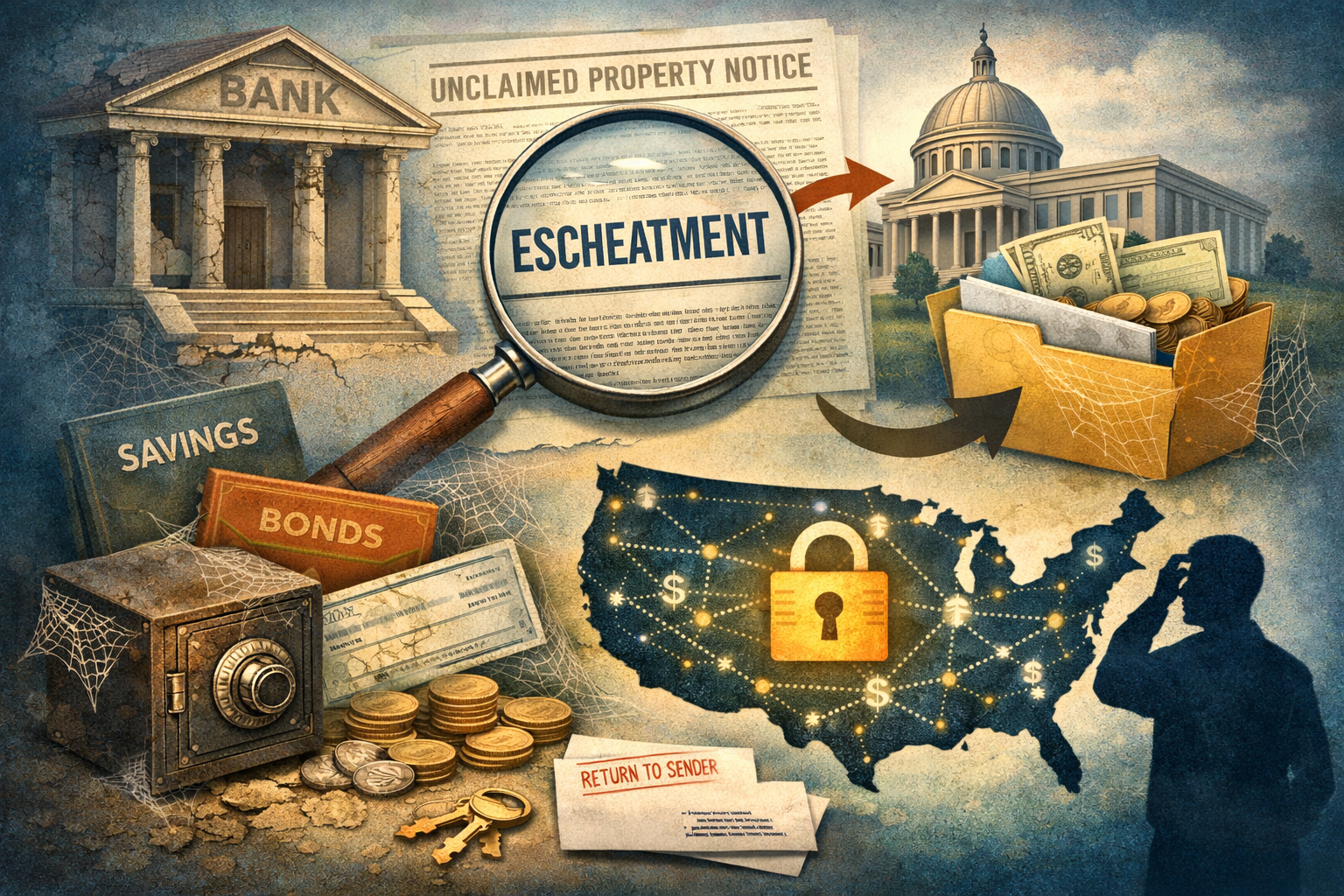
With multiple bank accounts, investment platforms, retirement plans, and insurance policies, it’s easy for financial assets to become fragmented and overlooked. But when accounts remain inactive for too long, they don’t just sit untouched — they can legally be transferred to the state through a process known as escheatment.
Escheatment is one of the most overlooked risks in personal finance, yet it affects millions of Americans each year. Understanding how it works, what triggers it, and how to prevent it is essential for protecting your assets and preserving long-term wealth.
What Is Escheatment?
Escheatment is the legal process that allows a state government to take custody of abandoned, unclaimed, or ownerless property. This typically occurs when assets remain inactive for a legally defined period or when ownership cannot be established.
Common situations that lead to escheatment include:
● Death without a will, trust, or identifiable heirs
● Long-term account inactivity
● Failure to update contact information
● Forgotten accounts from previous employers
● Unclaimed payments or distributions
● Lack of beneficiary designations
Once transferred, the state holds the property in trust until a rightful owner or heir submits a valid claim.
Assets That Can Be Escheated
Many people assume escheatment only applies to bank accounts, but it affects a wide range of property types, including:
● Checking and savings accounts
● Brokerage and investment accounts
● Retirement accounts and annuities
● Mutual funds, stocks, and bonds
● Uncashed checks and dividends
● Insurance proceeds and refunds
● Utility deposits
● Safe deposit box contents
● Payroll checks and wages
● Real estate
If an asset has monetary value and remains unclaimed, it can fall under state unclaimed property laws.
What Triggers Escheatment?
Escheatment occurs when property is legally classified as abandoned. Each state defines this differently, but common triggers include:
● No account activity for multiple years
● No communication with the financial institution
● Outdated address or contact information
● Failure to cash checks or claim distributions
● Death without estate documentation
● Missing beneficiaries
● Unclaimed inheritance
In most cases, escheatment happens quietly — not through intent, but through inattention and disconnection.
How the Escheatment Process Works
Although laws vary by state, the general process follows a similar structure nationwide:
1. Account inactivity begins
Accounts become dormant when there is no meaningful activity — transactions, logins, communications, or confirmations — over a defined period.
2. Dormancy period applies
Each state defines a dormancy period based on asset type. Financial institutions are legally required to attempt contact with the owner during this phase.
3. Transfer to the state
If contact fails and the dormancy period expires, assets are transferred to the state’s unclaimed property division, typically overseen by the state treasurer or comptroller.
4. Asset liquidation
In many cases, investments and securities are liquidated before or after transfer. If reclaimed later, owners typically receive the cash value at the time of transfer, not any potential growth that would have occurred.
Escheatment Laws by State
Dormancy periods vary based on:
● State law
● Asset classification
● Account type
Typical ranges include:
● Bank accounts: 3–5 years
● Investment accounts: 3–7 years
● Securities: commonly 3–5 years
● Wages: often 1 year
● Insurance proceeds: varies by state
Because rules change, individuals should always consult their state’s unclaimed property office for current guidelines.
How to Reclaim Escheated Property
Reclaiming escheated property is often possible for rightful owners and heirs.
Recovery process:
1. Search your state’s unclaimed property database
2. Use national databases such as MissingMoney.com
3. Submit a claim online
4. Provide identity and ownership documentation
5. Complete verification requirements
Processing times vary by state, but most claims are recoverable with proper documentation.
How to Prevent Escheatment
Preventing escheatment requires organization, engagement, and planning.
Practical prevention strategies:
Stay active
● Log into accounts regularly
● Make periodic transactions
● Maintain engagement with institutions
Consolidate accounts
● Reduce scattered financial relationships
● Combine old workplace plans when appropriate
● Simplify account structure
Keep contact information current
● Update addresses
● Update emails and phone numbers
● Monitor account notifications
Respond to dormancy notices
Financial institutions must send warnings before transferring assets. Any dormancy communication should be treated as urgent.
Implement estate planning
● Create a will or trust
● Name beneficiaries and contingent beneficiaries
● Coordinate beneficiary designations
● Keep documents updated
Strong estate planning prevents assets from becoming unclaimed.
Strategic Perspective: Asset Protection Through Organization
Escheatment is rarely caused by negligence — it’s usually caused by financial fragmentation.
As wealth becomes more complex, accounts multiply, and job mobility increases, the risk of losing track of assets grows. Without structure and planning, wealth can become disconnected from its owner.
True wealth management isn’t just about growing assets — it’s about protecting continuity, ownership, and control.
Because wealth that isn’t organized, documented, and integrated is wealth that can quietly disappear.
Sources:
https://www.fidelity.com/learning-center/personal-finance/what-is-escheatment