
The Overlooked Factor in Long-Term Investment Success: Taxes
January 9, 2026
Many investors devote significant time to researching stocks, bonds, and funds with strong return potential. They follow market commentary, read financial news, and seek input from friends or colleagues. Yet an important contributor to long-term results is often underappreciated: how much of those returns are lost to taxes.
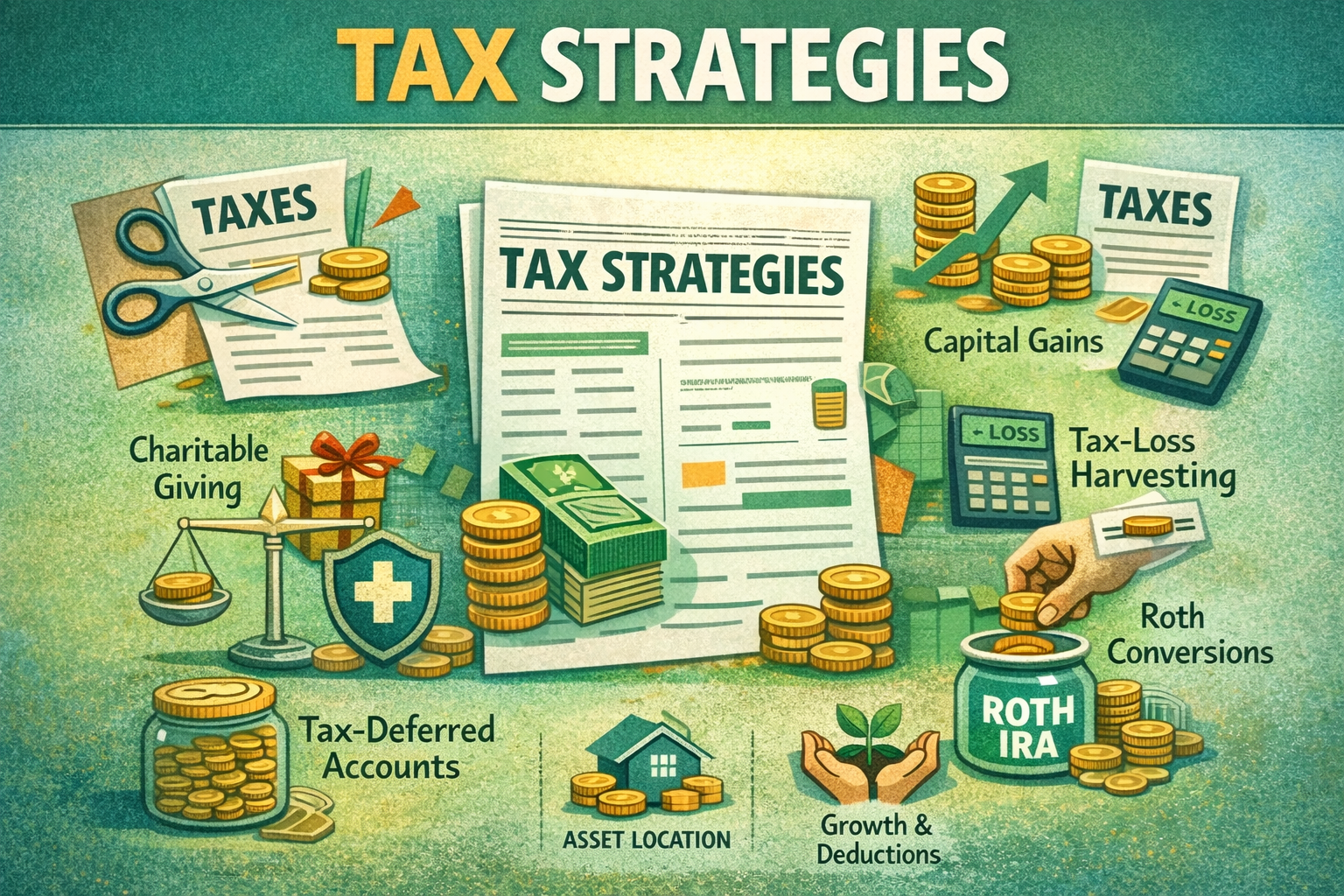
Tax-aware investing does not require complex maneuvers, but it does benefit from intentional planning. While market performance, inflation, and interest rates tend to dominate headlines, thoughtful tax management can meaningfully enhance what you keep after taxes. Federal income taxes can be influenced through several coordinated decisions, including what investments you own, when you buy or sell them, which accounts you use, how you handle losses, and whether strategies such as charitable giving are incorporated. When aligned properly, these elements can help reduce, delay, or better control taxes over time.
Importantly, taxes should not be the primary driver of investment decisions. Your goals, time horizon, financial circumstances, and risk tolerance should always come first. That said, layering tax awareness into portfolio management can improve overall efficiency.
Managing taxes along the way
The timing of transactions and the types of investments you hold can affect your tax bill. While tax considerations should not override sound investment judgment, they can be factored into ongoing portfolio decisions.
Capital losses. Selling an investment at a loss can help offset realized gains elsewhere in your portfolio. If losses exceed gains, up to $3,000 may be applied against ordinary income in a given year, with remaining losses carried forward to future years.
Capital gains. Assets held for more than one year generally receive more favorable long-term capital gains tax treatment than short-term holdings. Being mindful of holding periods can help avoid higher tax rates, though investment risk and return expectations should always remain the primary consideration. Tax rules may also vary for shares acquired through employer equity compensation plans.
Fund distributions. Mutual funds typically distribute income and capital gains annually. Investors who own shares in a taxable account on the distribution record date may owe taxes regardless of how long they have held the fund. Understanding distribution timing can help avoid unexpected tax liabilities.
Tax-favored investments. Different investments receive different tax treatment. Municipal bonds are often exempt from federal income tax and sometimes state tax, while interest from bonds and income from REITs is usually taxed as ordinary income.
This is where asset location matters—placing certain investments in taxable accounts and others in tax-advantaged accounts can improve after-tax results. Qualified dividends, which are generally taxed at long-term capital gains rates, may also factor into investment selection.
Fund and ETF structure. Investment vehicles vary in tax efficiency. Passive strategies often generate fewer taxable events than active ones, though there can be wide variation even within each category. Reviewing a fund’s historical tax profile can be useful before investing.
Employer stock plans. Company stock plans often come with unique tax rules and planning considerations, particularly around diversification, timing of sales, and filing requirements.
Deferring taxes for future growth
One of the most powerful tax benefits available is tax deferral. Retirement accounts such as 401(k)s, 403(b)s, and IRAs allow investments to grow without annual taxation. Other vehicles, including health savings accounts (HSAs) and certain annuities, may offer additional opportunities for tax-deferred growth. Keeping more money invested, rather than paying taxes along the way, can enhance compounding over time.
Account selection also matters. Locating investments that generate higher taxable income inside tax-advantaged accounts—and holding more tax-efficient investments in taxable accounts—can improve long-term outcomes.
Stock options present another planning opportunity. Exercise timing can affect taxes, but concentrating too heavily in a single company introduces risk, so tax considerations should be weighed alongside diversification and overall portfolio exposure.
Reducing taxes strategically
Beyond managing and deferring taxes, some strategies aim to reduce them outright.
Charitable giving. The tax code provides incentives for philanthropy, particularly for those who itemize deductions. Donating appreciated assets—such as long-term stocks, funds, or certain non-public assets—may allow you to claim a deduction for fair market value while avoiding capital gains taxes.
Donor-advised funds can also be used to accelerate deductions in high-income years while supporting charities over time. Beginning in 2026, non-itemizers will again be eligible to deduct a limited amount of cash charitable contributions.
Roth conversions. Moving assets from a traditional account to a Roth account requires paying taxes upfront, but future qualified withdrawals may be tax-free. Evaluating whether a conversion makes sense depends on income, tax rates, estate planning goals, and timing, and should be reviewed carefully with professional guidance.
Education and health savings. Education savings plans, such as 529 accounts, offer tax-deferred growth and tax-free withdrawals for qualified education expenses. Health savings accounts provide a rare combination of potential tax-deductible contributions, tax-deferred growth, and tax-free withdrawals for eligible medical costs.
The bottom line
Taxes are only one component of a sound financial strategy, but they can have a lasting impact on results. By thoughtfully coordinating how you invest, where assets are held, and when income is recognized, you may be able to improve after-tax outcomes and keep more of your wealth working for you over time.
Sources:
https://www.fidelity.com/viewpoints/investing-ideas/tax-strategy
Disclosure:
This information is an overview and should not be considered as specific guidance or recommendations for any individual or business.
This material is provided as a courtesy and for educational purposes only.
These are the views of the author, not the named Representative or Advisory Services Network, LLC, and should not be construed as investment advice. Neither the named Representative nor Advisory Services Network, LLC gives tax or legal advice. All information is believed to be from reliable sources; however, we make no representation as to its completeness or accuracy. Please consult your Financial Advisor for further information.