
What Does It Mean If I Get A 1099-K?
January 16, 2026
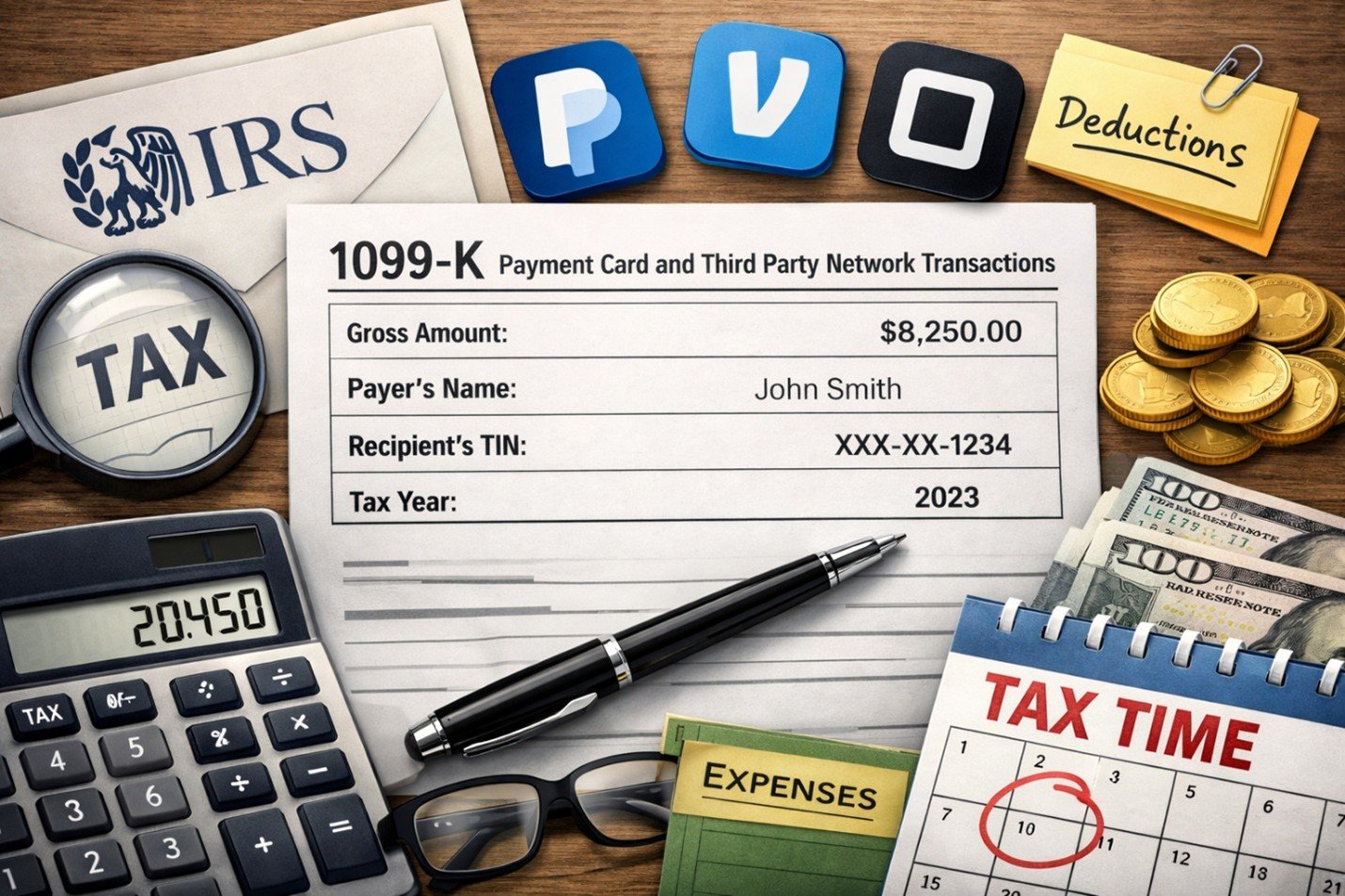
If you get a Form 1099-K from Venmo, PayPal, Square, or another payment platform, you may have questions. You might wonder what the form means, why you received it, and how it affects your taxes.
Receiving a 1099-K is not limited to traditional business owners or freelancers. Individuals who use digital payment apps for a variety of reasons may also receive one. Having a clear understanding of how Form 1099-K fits into your tax reporting responsibilities can help you avoid complications with the IRS or state tax authorities.
What is Form 1099-K?
Form 1099-K is an IRS information return that reports the total amount of payments processed on your behalf through certain payment methods. Its purpose is to help the IRS verify that income received through credit cards and third-party payment networks is being properly reported on tax returns.
This form is issued by payment settlement entities (PSEs), including companies such as PayPal, Venmo, Cash App, Square, and similar platforms. When reporting is required, the payment processor must provide a copy of the form both to you and to the IRS.
The dollar threshold that triggers Form 1099-K reporting is set by federal law and has changed over time. For many years, reporting was required only when payments exceeded $20,000 and involved more than 200 transactions during the year. More recent legislation authorized a lower threshold of $600 with no minimum transaction count, although the IRS has announced a phased rollout of this change. For the most current threshold and timing, consult the IRS’s official Form 1099-K guidance.
What payments are reported on a 1099-K?
Form 1099-K includes payments received for goods or services through credit cards, debit cards, gift cards, and third-party payment networks. This generally covers transactions processed through digital platforms such as Venmo, PayPal, Square, or similar services. Payments made by cash, check, or bank transfer outside of these networks are not included on the form.
Each payment processor calculates reporting thresholds based on the total amount processed through its platform during the calendar year. If your combined transactions meet or exceed the applicable threshold, the processor must issue a 1099-K—even if you do not think of the activity as a business. While not all payments reported on a 1099-K are necessarily taxable, the IRS still expects the amounts to be addressed on your tax return.
How do I report a 1099-K?
If you are self-employed, operate a sole proprietorship, or earn income as an independent contractor or gig worker, the amounts shown on your 1099-K are typically reported on Schedule C as part of your federal income tax return.
Small business owners and landlords who accept payments through third-party processors may receive one or multiple 1099-K forms reflecting gross receipts for the year. Because reporting thresholds have changed, it is possible to receive a 1099-K now even if you did not receive one in prior years.
If you already track your income using accounting software or spreadsheets, the amounts on your 1099-K may duplicate income you have already recorded. In addition, you might also receive Forms 1099-NEC or 1099-MISC for similar work. When payments are made through third-party processors, the same income can appear on multiple forms. Reviewing your records carefully—or working with a qualified tax or legal professional—can help prevent double reporting.
It is also important to remember that Form 1099-K reports gross payments, not profit. Business expenses, fees, refunds, and returns are not deducted on the form and must be accounted for separately when calculating taxable income.
What if I’m not a business owner but received a 1099-K?
Form 1099-K is not limited to businesses. If you receive one, do not ignore it. The payment processor has already sent a copy to the IRS using your Social Security number or taxpayer identification number, allowing the IRS to match the reported income to your tax return.
Failing to reconcile the form with your return can result in penalties, interest, or increased audit risk. In some cases, 1099-K forms may contain mistakes, such as incorrect amounts, duplicate reporting, or transactions that were not taxable.
If you believe the form is inaccurate or does not represent taxable income, you can request a correction from the payment processor or seek guidance from a legal professional on how to properly address it.
Bottom Line
No matter if you use payment apps for business, side income, or personal use, it is important to review the form carefully. Make sure to check it against your records. Reporting the amounts correctly can help you avoid mistakes and unwanted IRS attention. When questions arise or the numbers do not appear to align with your actual taxable income, seeking professional guidance from a financial advisor or tax professional can provide clarity and help ensure your tax return is accurate and complete.
Sources:
Disclosure:
This information is an overview and should not be considered as specific guidance or recommendations for any individual or business.
This material is provided as a courtesy and for educational purposes only.
These are the views of the author, not the named Representative or Advisory Services Network, LLC, and should not be construed as investment advice. Neither the named Representative nor Advisory Services Network, LLC gives tax or legal advice. All information is believed to be from reliable sources; however, we make no representation as to its completeness or accuracy. Please consult your Financial Advisor for further information.