
The Power of Compounding & Long-Term Investing
February 3, 2026
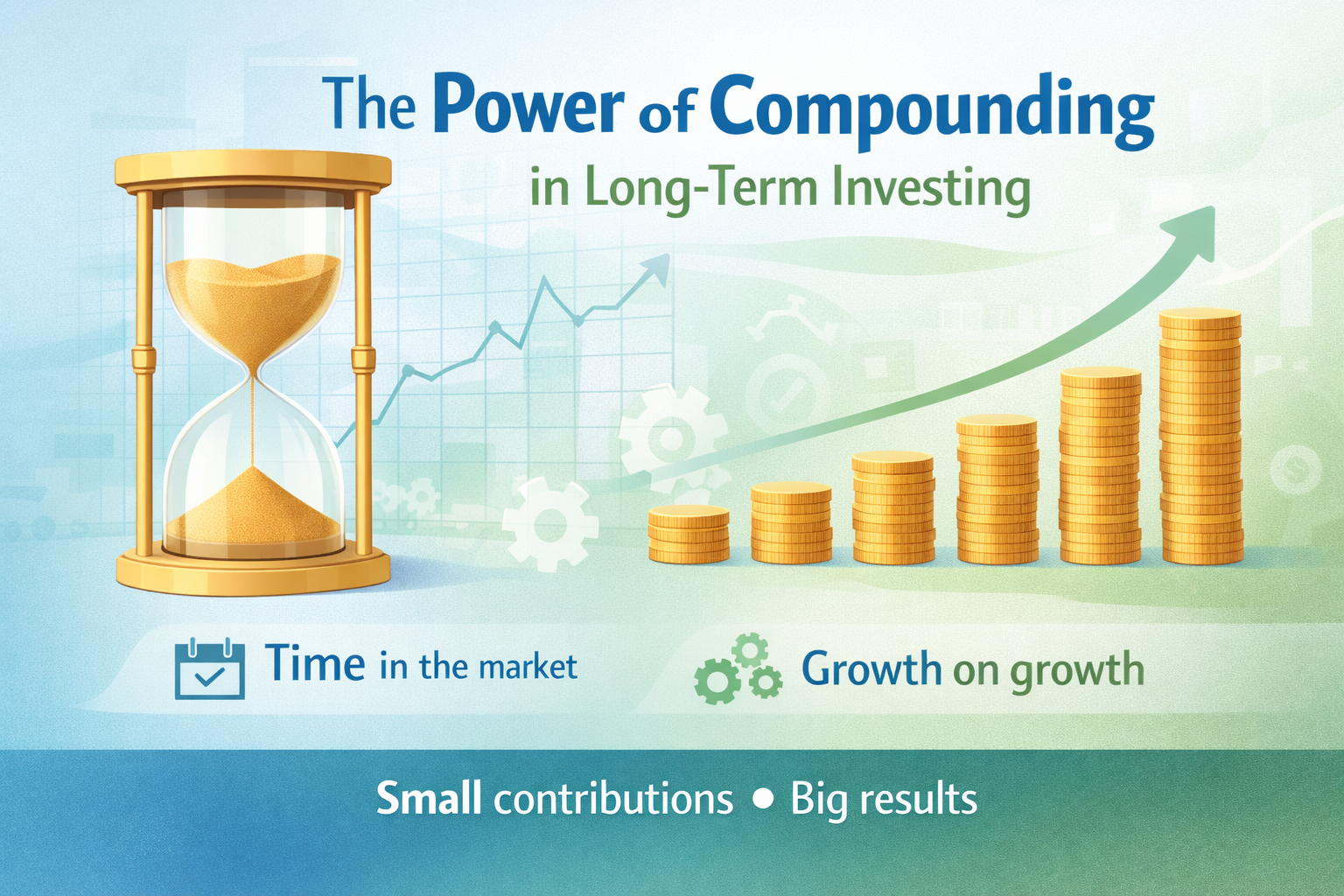
Compounding is one of the most powerful forces in personal finance and long-term investing. It is the process by which your money earns returns — and then those returns generate additional returns over time. This creates exponential growth rather than simple, linear growth.
Whether you're saving for retirement, building generational wealth, or growing long-term investments, compounding is the foundation of sustainable financial success. It doesn’t rely on market timing, speculation, or constant portfolio changes — it relies on time, discipline, and consistency.
What Is Compounding in Investing?
Compounding occurs when investment earnings are reinvested instead of withdrawn. Those reinvested earnings then begin producing returns of their own.
In practical terms, compounding applies to:
● Investment returns
● Interest earnings
● Dividends
● Capital appreciation
● Retirement accounts
● Business profits
The longer your money stays invested, the more powerful the compounding effect becomes.
Why Time Is the Most Valuable Asset in Wealth Building
The most important factor in compounding is not the rate of return — it’s time.
An investor who starts early often outperforms someone who invests more aggressively later. That’s because compounding needs time to multiply returns through repeated growth cycles.
Time allows:
● Growth on growth
● Recovery from market downturns
● Reinvestment of earnings
● Tax-advantaged accumulation
● Portfolio maturation
Long-term investors don’t outperform because they predict markets better — they outperform because they allow compounding to work uninterrupted.
Consistent Investing vs. Market Timing
Compounding rewards consistent behavior, not perfect decisions.
Trying to time the market often interrupts compounding by:
● Pulling capital out during downturns
● Missing recovery periods
● Creating emotional decision cycles
● Increasing transaction costs
● Triggering unnecessary taxes
Systematic investing, automated contributions, and long-term holding strategies allow compounding to operate across all market conditions.
Tax-Efficient Compounding Strategies
Taxes are one of the biggest obstacles to long-term compounding. Tax-efficient planning keeps more capital invested and working for you.
Key tools that accelerate compounding:
● Traditional IRAs and 401(k)s (tax-deferred growth)
● Roth IRAs and Roth 401(k)s (tax-free growth)
● Health Savings Accounts (HSAs)
● Long-term capital gains strategies
● Asset location planning
● Tax-loss harvesting
Reducing tax drag allows compounding to work faster and more efficiently.
Behavioral Finance: The Real Threat to Compounding
The greatest risk to compounding is investor behavior, not market volatility.
Compounding is disrupted by:
● Panic selling
● Emotional investing
● Short-term thinking
● Overtrading
● Performance chasing
● Strategy hopping
Successful long-term investors protect their capital not by predicting markets, but by maintaining discipline during uncertainty.
Compounding Across Life Stages
Compounding benefits investors at every stage of life:
Early career: Small contributions create long-term exponential growth
Mid-career: Higher income accelerates compounding power
Pre-retirement: Growth + risk management preserves momentum
Retirement: Compounding supports income sustainability and inflation protection
Legacy planning: Compounding supports multi-generational wealth transfer
Compounding is not just a growth tool — it’s a longevity tool for wealth.
Long-Term Wealth Is Built Through Systems, Not Events
Wealth is not created through one decision or one investment. It is built through repeatable systems:
● Automated contributions
● Structured savings plans
● Strategic asset allocation
● Risk-managed portfolios
● Tax planning integration
● Long-term investment discipline
Compounding thrives in systems — not in reactionary strategies.
Final Thoughts
Compounding isn’t just a formula — it’s a framework for decision-making. It depends on patience, discipline, and structure as much as it does on returns.
Successful investors do not chase headlines or short-term gains. Instead, they focus on protecting the process that helps wealth grow steadily and sustainably. Because lasting wealth isn’t built by predicting markets — it’s built by staying invested, staying disciplined, and letting time do the work.
Sources:
Disclosure:
This information is an overview and should not be considered as specific guidance or recommendations for any individual or business.
This material is provided as a courtesy and for educational purposes only.
These are the views of the author, not the named Representative or Advisory Services Network, LLC, and should not be construed as investment advice. Neither the named Representative nor Advisory Services Network, LLC gives tax or legal advice. All information is believed to be from reliable sources; however, we make no representation as to its completeness or accuracy. Please consult your Financial Advisor for further information.